Dry and wet soot require distinct operational methodologies based on how combustion occurred. Fast-burning, high-temperature fires fueled by dry wood or paper create dry soot, leaving a powdery, low-moisture residue.…
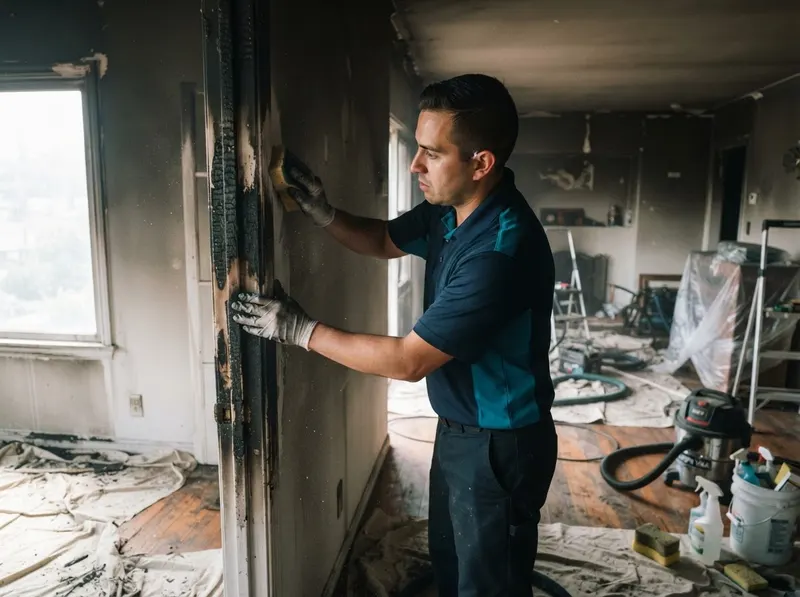
Dry and wet soot require distinct operational methodologies based on how combustion occurred. Fast-burning, high-temperature fires fueled by dry wood or paper create dry soot, leaving a powdery, low-moisture residue. Wet soot results from low-oxygen, smoldering fires fueled by plastics, synthetic textiles, foam rubber, and plumbing pipes. Wet residue carries a dense, sticky consistency and high acidity that etches glass, chrome, and enameled paint within 48 to 72 hours. Attempting to wipe wet residue with consumer-grade damp rags smears corrosive acids deeper into porous drywall, permanently locking odorous compounds into structural substrate. Technical soot cleanup follows a calibrated sequence: dry particulate capture occurs first via vulcanized natural rubber sponges, followed by specialized wet alkaline emulsifiers engineered to neutralize acidic grease without driving contaminants inward.
Material composition dictates structural salvageability. Unfinished framing lumber and raw concrete readily absorb volatile organic compounds via convective heat currents. If particulate matter remains on wet surfaces from firefighter suppression water, soot binds to gypsum board and requires aggressive physical remediation or complete demolition. Dry soot cleanup fits light-to-moderate surface deposits across painted finishes, masonry fireplaces, and solid timber ceilings where moisture has not caused deep staining. The operational trade-off centers on cleaning time versus substrate durability: wet chemical remediation safely extracts thick, greasy films from non-porous finishes, but over-saturating plaster or sheetrock weakens structural core integrity.
Local architectural conditions across Los Angeles dictate specific soot remediation protocols. In hillside properties throughout Silver Lake, Pacific Palisades, and Brentwood, complex multi-level layouts and ocean drafts pull soot plumes through open-beam ceilings and custom joinery. Historic plaster-and-lath construction in Los Feliz and Highland Park requires dry vacuuming under 0.3-micron HEPA filtration to clear particulate matter without pulverizing brittle vintage wall surfaces. In dense urban pockets like Studio City and Sherman Oaks, residential proximity to canyon brush fire zones introduces external carbon ash on top of internal structural smoke damage. Technicians deploy industrial air scrubbers processing 1,000 to 2,000 cubic feet per minute to establish negative pressure zones, preventing secondary soot migration into unaffected bedrooms or ground-floor commercial spaces.
Every job gets a firm, written price after a free on-site visit.
Tell us about your dry & wet soot removal job in los angeles and we'll send a clear, written quote, usually the same day.
 Pro Fire Damage Restoration