Operational protocols for thermal fogging and hydroxyl odor neutralization address two distinct phases of post-fire atmospheric triage: high-velocity vapor penetration and ongoing safe-occupancy molecular destruction.…
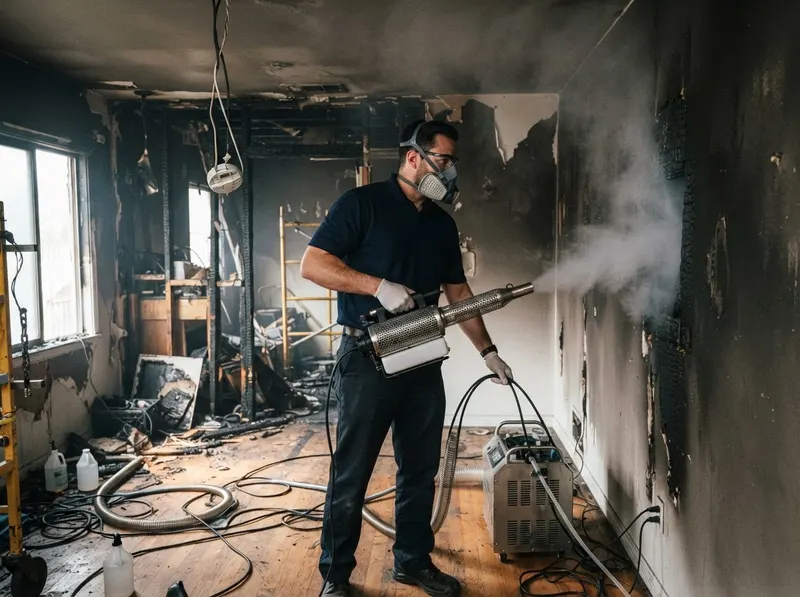
Operational protocols for thermal fogging and hydroxyl odor neutralization address two distinct phases of post-fire atmospheric triage: high-velocity vapor penetration and ongoing safe-occupancy molecular destruction. Thermal fogging pairs a petroleum- or water-based deodorizer with a specialized heating unit to produce micron-sized aerosol droplets between 0.5 and 2.0 microns. These microscopic particles mirror the physical behavior of fire-driven smoke, penetrating structural pores, subfloors, and framing lumber in the exact footprint where combustion gases entered. Hydroxyl generators utilize specific ultraviolet wavelengths (185 to 254 nanometers) to react with ambient moisture and split water molecules into hydroxyl radicals (OH-). These reactive radicals actively dismantle volatile organic compounds (VOCs), sulfur compounds, and carbon chains in the ambient air without requiring the complete evacuation of sensitive contents.
Selecting the correct neutralization mechanism depends strictly on the chemical profile of the fire debris and structural occupancy requirements. Fast-burning, high-heat structural fires consume wood framing and drywall, leaving dry, powdery soot that responds efficiently to solvent-based thermal fogging once source debris is removed. Slow-burning, oxygen-deprived fires generate sticky, oily synthetic soot from melting wiring, plastics, and upholstery; these scenarios demand initial contact chemical neutralization followed by 48 to 96 hours of continuous hydroxyl scrubbing to break polycyclic aromatic hydrocarbons. The operational trade-off centers on treatment logistics: thermal fogging mandates a complete 4- to 8-hour site evacuation while aerosol clouds settle, whereas hydroxyl deployment operates safely alongside ongoing structural repairs and active pack-out operations.
Properties situated across Los Angeles present variable atmospheric conditions that dictate equipment calibration. In hillside and coastal microclimates like Pacific Palisades and Brentwood, morning marine layers introduce elevated indoor relative humidity, which enhances hydroxyl radical generation rates but requires strict moisture monitoring to prevent particulate clumping. Conversely, inland valley properties across Studio City and Sherman Oaks experience dry, elevated ambient temperatures that accelerate VOC off-gassing from attic rafters, demanding higher concentrations of chemical pairing agents during the thermal fog cycle. From multi-story residential hillsides in Silver Lake, Echo Park, and Los Feliz to low-density properties in Cheviot Hills and Highland Park, treatment chambers must be sealed with 6-mil polyethylene barrier containment to isolate unaffected living spaces and prevent odor migration along common framing bays.
Every job gets a firm, written price after a free on-site visit.
Tell us about your thermal fogging & hydroxyl odor neutralization job in los angeles and we'll send a clear, written quote, usually the same day.
 Pro Fire Damage Restoration